Step 11 of 21 · Each month
A credit note
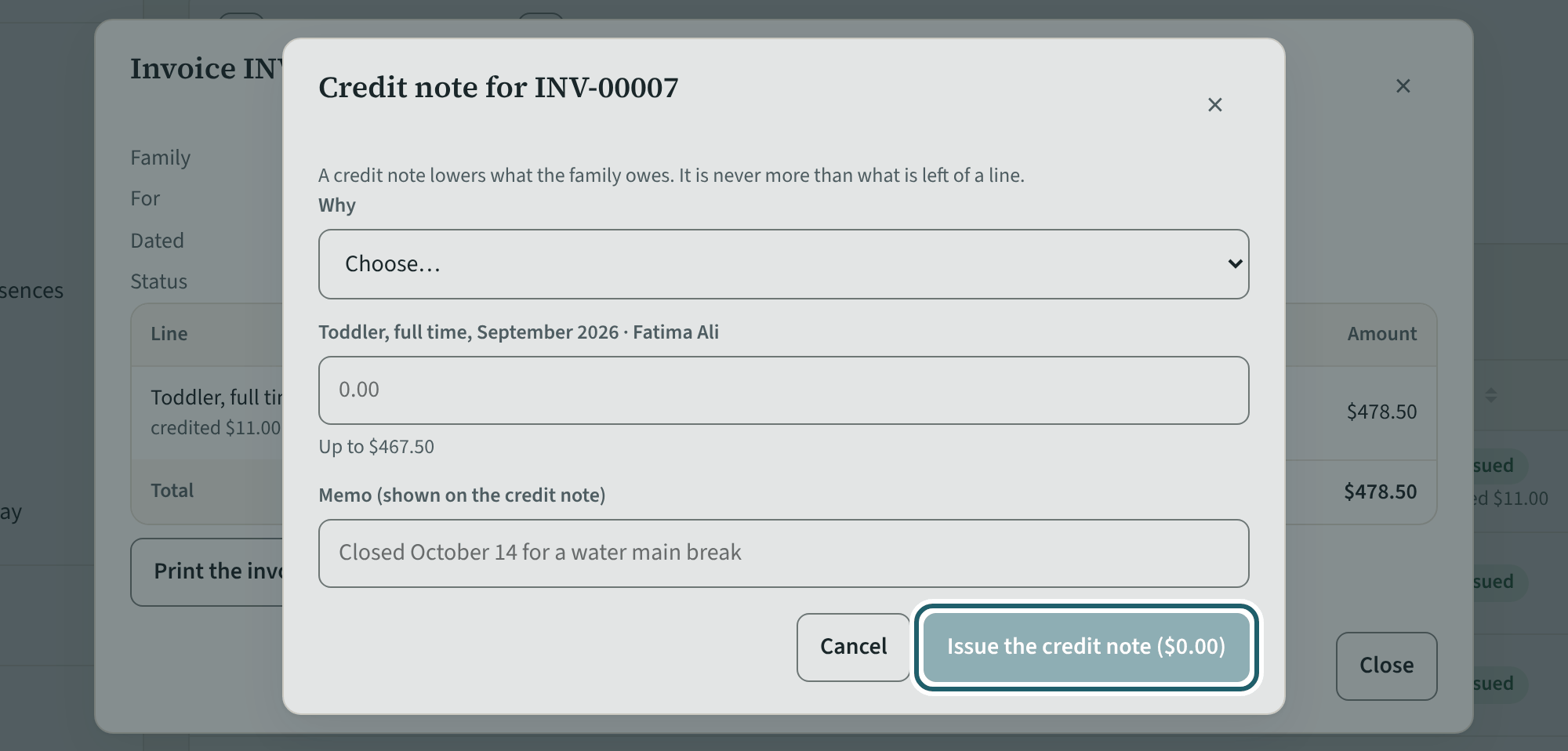
"Issue a credit note": why, an amount on each line up to what is left of it, and a memo the family reads.
Watch out: A credit note lowers what the family owes; it is never more than what is left of a line. "Withdraw the credit note" asks why and makes a draft that charges its lines back: check it, then issue it.
More about this
The reasons: a closure, the child left, an overpayment, fee subsidy approved, a CWELCC adjustment, a mistake on the invoice, or something else (say what). The memo is printed on the credit note ("Closed October 14 for a water main break"). A second credit for the same lines asks why it is another one.
With "The child left" chosen on an invoice with a base fee, the dialog says to record the child's last day and use "Credit and redraft" instead: the new draft bills the days of care up to that day by the centre's part-month rule. A credit by the days missed can differ from it by a few dollars, and the books' checks then list the invoice.
A credit note has its own number and prints like an invoice. What it credits becomes the family's credit when the invoice was already paid, and the next invoice uses it first.
Your centre's words for people and its policies may differ; the screens are the same. The screen is from KeepCount 0.99.141, captured October 27, 2026 in a demonstration organization: everyone in it is fictional. Section numbers are O. Reg. 137/15 (General) under the Child Care and Early Years Act, 2014, read on e-Laws on October 23, 2026. This explains how KeepCount works; it is not legal advice, and the Ministry's program advisors decide compliance.