Step 3 of 9 · Your invoices and payments
An invoice
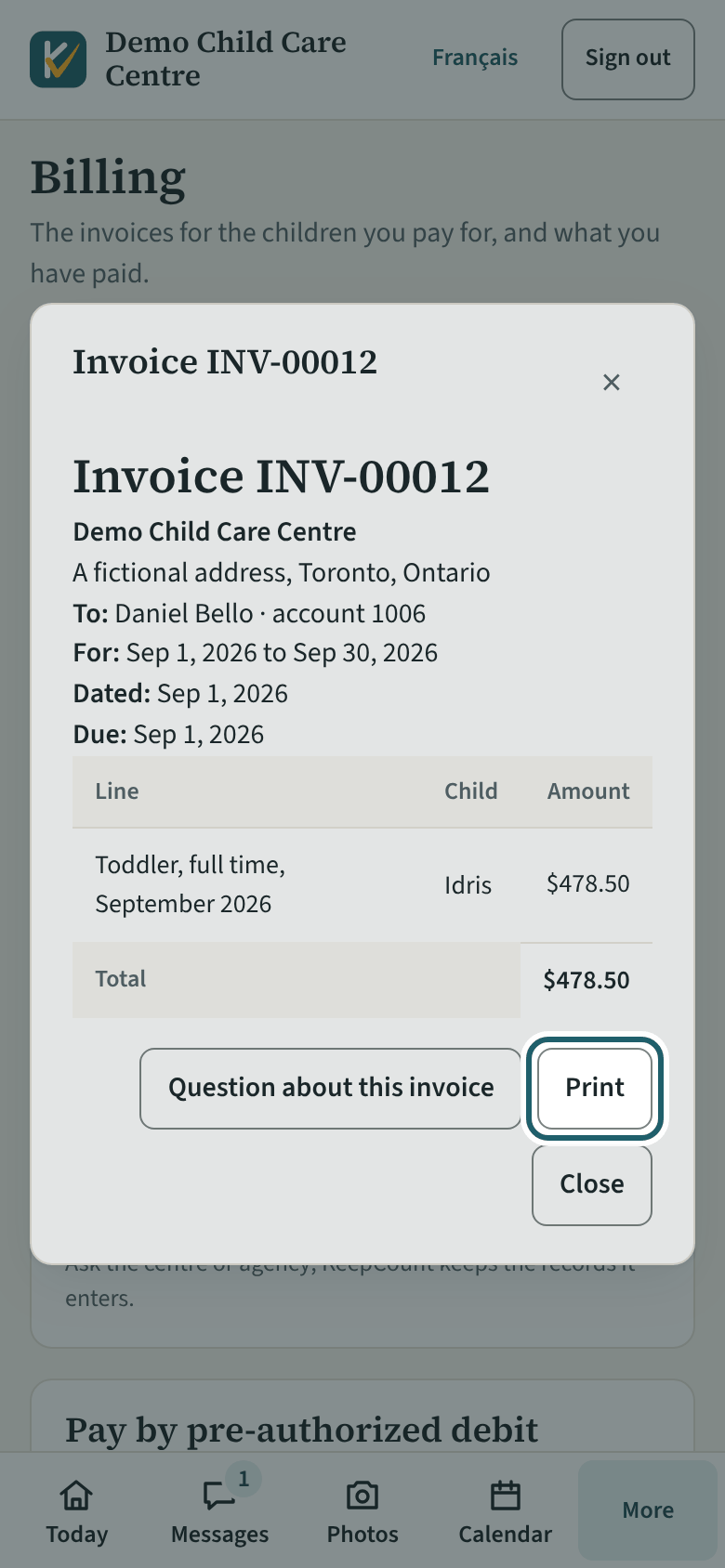
Tap an invoice: as issued, each line by child, the tax, the total and the due date. "Print" prints it; "Question about this invoice" writes to the office.
Watch out: An issued invoice is never changed: a mistake is corrected by a credit note from the centre, which shows in the list as its own line.
More about this
"Question about this invoice" (not on a credit note) opens a message to the office with the invoice's number in the subject; the office answers under Messages.
The invoice names the centre (and its business number, when it gives one), who it is to, the period, and the day it is dated and due. Under the total: a funder's share and the family's when a fee subsidy pays part, and each payer's part when the payers share the invoices. If you are set not to see the other guardians, the invoice shows only your own name: the other parts show their percentage and amount as "A payer".
When the centre emails invoices, the email says "You have a new invoice from" the centre, with the number, the month, the amount and the due date, then one sentence on how the invoice is paid (a pre-authorized debit already scheduled for it, with its amount, its day and the last four digits of the bank account; or that the family pays by pre-authorized debit and gets the amount and the day by email first; or, when neither is known, to pay the way it usually pays the centre), never a child's name, and a button that opens the invoice on keepcount.ca.
Your child's centre or agency may use other words for people and its own policies; the screens are the same. The screen is from KeepCount 0.99.171, captured October 30, 2026 in a demonstration organization: everyone in it is fictional. Section numbers are O. Reg. 137/15 (General) under the Child Care and Early Years Act, 2014, read on e-Laws on October 23, 2026. This explains how KeepCount works; it is not legal advice, and the Ministry's program advisors decide compliance.